Grounds for Concern: Why Muslim Burial Space Has Become a Test of Local Democracy
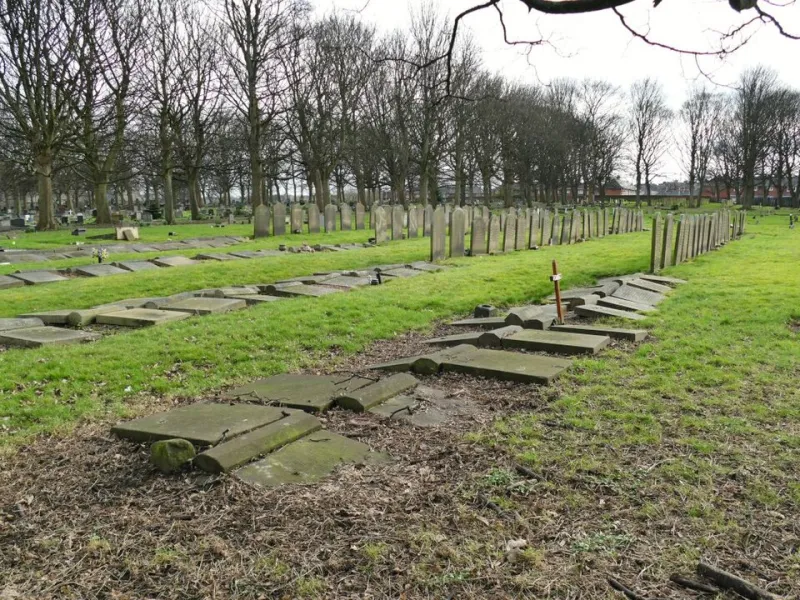
Photo: Stephen Craven , CC BY-SA 2.0, via Wikimedia Commons
There is a particular kind of grief that comes with waiting. In a number of English local authority areas, families who expect to bury a relative within a day or so of death are being told that the nearest available plot is weeks away, or in another borough altogether. The reasons are cumulative rather than dramatic — Victorian cemeteries reaching capacity, land values, slow site acquisition, and populations that have grown faster than burial provision was ever planned for.
The result is a queue. And a queue, in local government, is a political object. It invites scrutiny, comparison and eventually a decision in a committee room. For Muslim communities that have spent two decades building mosques, schools and community centres, burial ground is the next piece of infrastructure — and the least glamorous.
The arithmetic behind the delay
Burial need is unusually predictable. Death rates by age cohort are well understood, and the proportion of residents who will seek burial rather than cremation is stable enough to model. What is far less predictable is supply: whether a council cemetery has a reserved section with room left, whether a private natural burial ground will accept the required orientation and depth, and whether a neighbouring authority will sell plots to non-residents.
Add in the practical requirements many Muslim families observe — prompt burial, a defined orientation, and often a preference for ground that will remain undisturbed in perpetuity — and the pool of genuinely suitable land shrinks considerably. In some places the search now crosses borough boundaries, and families are travelling forty or fifty miles to a plot.
Officers in bereavement services are, on the whole, alive to this. The difficulty is that cemetery land sits inside a wider set of council priorities, and a shortage rarely announces itself until it is acute. By then, the only sites left are the awkward ones: a wedge of former playing field, an extension to an existing cemetery, or a parcel of green belt on the edge of town.
Planning committees as the new front line
That is how burial becomes a planning story. Applications for new cemeteries and extensions arrive at committee with officer reports weighing drainage, access, archaeology, landscape impact and highway capacity. Members then make a judgement that is partly technical and partly political, and residents who have never attended a planning meeting before find themselves addressing a chamber about groundwater.
Community groups that have been through this describe a steep learning curve. The evidence that carries weight is rarely emotional, however justified the emotion. What tends to move a committee is a documented shortfall: plots remaining, years of supply, projected deaths, the number of local families already travelling outside the borough, and the cost to those families.
Green belt is the recurring obstacle. National planning policy treats new burial ground in the green belt as inappropriate development, requiring very special circumstances to be demonstrated. Appeals have succeeded where an authority could show a genuine and evidenced shortage of alternatives — but the burden of proof sits with the applicant, and it is heavy.
What a credible bereavement strategy looks like
Several councils have begun folding faith burial need into broader bereavement strategies rather than treating it as a separate accommodation. The stronger examples tend to share certain features.
- A published audit of existing provision, plot by plot, including reserved sections and their remaining capacity.
- Projected need over at least twenty years, broken down by faith and by preference for burial or cremation.
- A land supply plan identifying candidate sites, with realistic timescales for acquisition and planning.
- Cross-boundary arrangements with neighbouring authorities, set out in writing rather than assumed.
- Transparent fee structures, so that residents of one community are not paying materially more for an equivalent service.
- A commitment to consult faith groups at the strategy stage rather than at the application stage.
None of this is radical. Most of it is standard asset planning. The gap is usually one of attention rather than principle.
Engaging before the queue forms
For community organisations, the practical lesson of the past few years is that the decisive moments come earlier than most people expect. The Local Plan examination, the annual budget consultation, the scrutiny committee review of bereavement services — these are where land gets allocated and money gets committed.
That means a few unglamorous habits. Submitting freedom of information requests for plot capacity and projected shortfalls. Registering as a consultee on the local plan. Asking a ward councillor to table a written question. Attending a pre-application meeting with the planning authority before a scheme is designed. Coordinating with other faith communities, who often face the same structural problem and whose evidence strengthens a shared case.
It also means a tone. Councils respond better to submissions that acknowledge competing pressures and offer solutions than to submissions that arrive as accusations. A short, well-referenced paper setting out need, alternatives considered and a workable site will do more than a petition, however large.
A test, not yet a crisis
In a handful of places the position is already serious. Elsewhere there is still time, though not much, and the window narrows with each approved housing scheme on land that might once have served as a cemetery extension.
The queue is, in the end, a measure of how well a local democracy plans for the things nobody campaigns for until they are needed. Burial ground does not appear in manifestos. It appears in the diary of a family on the worst week of their lives. Between those two points sits a committee, a plan and a consultation — and that is where Muslim communities, like any others, can reasonably ask to be heard.