Between the Ward and the Iftar: The Quiet Bargaining Over Ramadan Leave in 2026
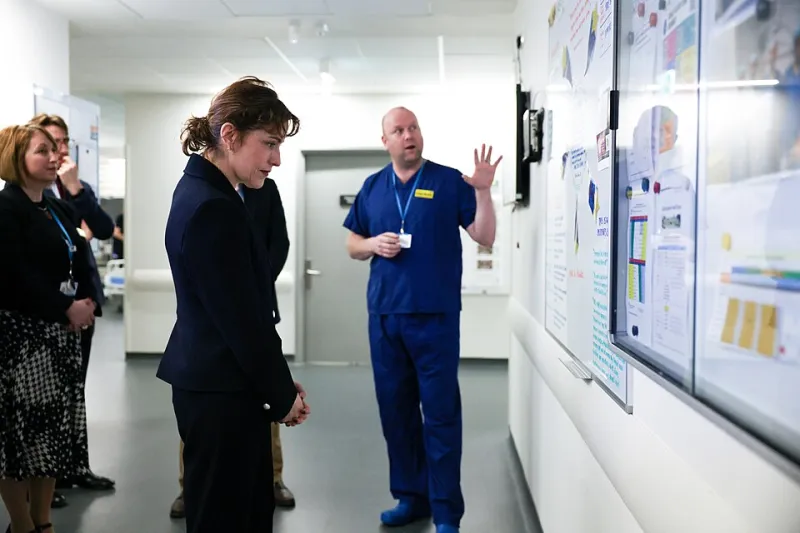
Photo: UK Government, CC BY 2.0, via Wikimedia Commons
Ramadan 2026 began in the third week of February, arriving in the middle of winter pressures rather than at the edge of spring. It ended in mid-March. For Muslim staff in the NHS — nurses, porters, healthcare assistants, junior doctors, cleaners and pharmacists — the month did not only require abstention from food and drink between dawn and sunset. It required a rota that could bend.
The official position is rarely controversial. Religion and belief are protected characteristics under the Equality Act 2010. NHS trusts publish equality policies, flexible working guidance and statements about inclusive rostering. The gap between those documents and the ward is where the real story of Ramadan 2026 sits.
A lunar month in a linear rota
Ramadan moves roughly eleven days earlier each year. That simple astronomical fact creates a recurring operational problem for employers whose leave calendars, training schedules and winter plans are fixed months in advance. In 2026 the month overlapped with a period when many trusts were already managing high vacancy rates, delayed discharges and the usual pressures of cold weather.
For staff, the practical questions were immediate. Could annual leave be taken in the final week of Ramadan? Could a night shift be swapped for an early? Would a break be long enough to reach a prayer room, or to sit with colleagues at iftar? Could a junior doctor on a rotational placement request a different pattern without disrupting training requirements?
The answers varied not only between trusts but between wards in the same hospital. In some departments, managers had consulted staff before the rota was published. In others, requests were handled individually, sympathetically but informally, with outcomes dependent on who happened to be in charge.
The bargaining that does not appear in the policy
Much of the adjustment happened through informal reciprocity. A nurse might cover a colleague's Sunday in exchange for an earlier finish during Ramadan. A porter might agree to a run of late shifts so that a colleague could attend evening prayers. These arrangements are often praised as evidence of good teamwork, and they frequently are. But they also place the burden of accommodation on relationships rather than systems.
That burden falls unevenly. A senior nurse with years of service may have more room to negotiate than a newly arrived healthcare assistant on a fixed shift pattern. A consultant may be able to rearrange a clinic; a cleaner employed through a facilities contract may have no access to the trust's flexible working policy at all. Junior doctors on rotation can find that their leave request is governed less by their current department than by a training programme they joined months earlier.
Managers are not villains in this account. Many were working within tight establishments and limited bank cover. The point is that goodwill is not a workforce strategy. When accommodation depends on the sympathy of an individual manager, it is likely to be inconsistent, and inconsistency is difficult to challenge.
Beyond the iftar plate
Inclusive rostering is sometimes reduced to a question of food. A trust may point to an iftar event in the staff canteen, or to a prayer room opened during Ramadan, as evidence of good practice. Those things matter. But they do not address fatigue, hydration, medication or the safety-critical nature of clinical work.
Not every Muslim fasts. Illness, pregnancy, travel and other exemptions are recognised in Islamic teaching, and some staff choose not to fast for personal reasons. For those who do, a twelve-hour shift without food or water can be physically demanding, particularly in personal protective equipment or on a ward where breaks are already fragile. The risk is not usually dramatic. It is the quieter risk of presenteeism, of staff declining to ask for adjustments because they do not want to be seen as difficult.
A rota that treats Ramadan as an operational concern from the outset can reduce that risk. A rota that treats it as a late request places the responsibility on the individual to negotiate, justify and sometimes absorb the cost.
What good practice looked like
Where Ramadan 2026 appeared to work well, the ingredients were rarely expensive. Staff were asked about their needs before the rota was finalised. Leave requests were considered in a defined window rather than on a first-come, first-served basis that favoured those with desk access. Prayer provision was checked, not assumed. Refused requests were recorded so that patterns could be reviewed.
Some trusts used their multi-faith staff networks to test plans. Others briefed rota coordinators on the dates in advance. In a few places, managers published a short note explaining how requests would be handled, which reduced the sense that accommodation was a personal favour. None of this required a new bureaucracy. It required faith to be present at the planning stage.
The accountability gap
The harder question is what happens after Ramadan. Most trusts do not publish data on religious leave requests, refused requests or the use of flexible working for religious reasons. Staff surveys may capture a general sense of inclusion, but they rarely capture the specific experience of a night-shift worker who swapped three shifts to attend Eid prayers.
Without that data, inconsistency hides. It hides in the department where requests are always granted and in the department where they are always declined. It hides in the gap between the equality policy and the rota spreadsheet. Public bodies are accustomed to monitoring recruitment, disciplinary outcomes and pay gaps. Religious accommodation in shift work deserves similar attention, not because it is controversial but because it is ordinary.
Planning for 2027 begins now
Ramadan 2027 is expected in early February, which means it will again overlap with winter. Trusts that wait until January to think about leave will repeat the same improvised negotiations. Trusts that start conversations with staff networks, rota teams and equality leads in the autumn will have a better chance of treating the month as part of normal workforce planning.
The rota is an operational document, but it is also a statement about whose commitments are recognised. For Muslim health workers in 2026, the month was not an interruption to the NHS. It was part of the year, and part of the work. The question for employers is whether the system will recognise that before the requests arrive, rather than after the shifts have already been filled.