The Clipboard at the Threshold: Mosque Volunteers and the Language of Fire Safety
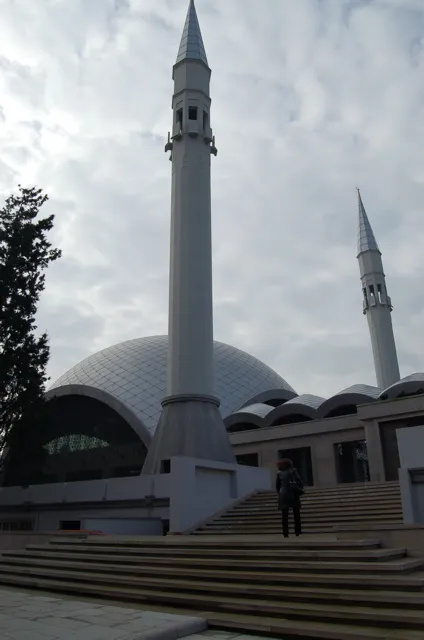
Photo: Foreign and Commonwealth Office, OGL v1.0, via Wikimedia Commons
On any given Friday, before the first rows of worshippers fill the hall, a volunteer at a mosque in the English Midlands performs a small, unglamorous ritual. He checks that the emergency exits open freely, that the fire door at the side of the prayer hall has not been wedged open by a chair, and that the evacuation diagram by the entrance still matches the layout of the building. The task takes minutes. Its significance is harder to measure.
Since the Grenfell Tower fire of 2017, and especially since the Building Safety Act 2022, the language of fire safety in England has changed. Terms such as fire risk assessment, evacuation strategy and building safety case have moved from the specialist margins into the ordinary vocabulary of trustees, landlords and community groups. In 2026, mosque committees across the UK are working out what that language means for buildings that are often old, adapted, multi-purpose and loved.
The regulatory landscape differs across the UK, and no article can substitute for professional advice. But the broad direction is clear. Those responsible for premises are expected to know their buildings, record their decisions and show that safety is managed rather than assumed. For mosques, that expectation arrives at a sensitive point: the same halls that host prayer also host advice surgeries, food collections, youth classes and funeral gatherings. A single building may serve several publics at once.
A Duty That Arrives on Paper
For many committees, the first encounter with the new culture is documentary. A fire risk assessment lands on the table, followed by questions about compartmentation, escape routes, signage and the storage of materials. Trustees who are used to balancing modest budgets must decide which recommendations are urgent, which are routine and which require specialist contractors.
The paperwork can feel remote from the spirit of the place. Yet it also imposes a useful discipline. A mosque that can show when the alarm was tested, who checked the exits and how a fault was reported is a mosque that has turned care into a system. That system does not replace the goodwill of volunteers. It gives goodwill a structure.
Some committees have responded by appointing a named trustee for building safety and by creating a simple logbook that sits beside the main entrance. Others have asked their local fire and rescue service for a familiarisation visit. These are not dramatic gestures. They are the kind of quiet administration that prevents small faults from becoming large risks.
The Rota Behind the Regulation
The most visible change is the emergence of the volunteer fire warden. In some mosques, wardens are drawn from the existing management team. In others, younger members have been trained to support evacuations, check exits and guide vulnerable worshippers during drills. The role requires more than confidence. It requires an understanding of how people actually behave when they are asked to leave a familiar space.
Friday prayers present particular challenges. Arrivals are concentrated. Shoes are removed. Elderly worshippers may need assistance. Children may be present. A warden who has thought through these details is more useful than a notice that assumes everyone will read a plan.
Language matters here too. A short announcement before the sermon, delivered in plain English and in community languages where needed, can do more than a laminated poster. The aim is not to frighten people but to normalise small habits: keeping routes clear, reporting damaged equipment, and treating the fire door as a life-safety device rather than a convenient draught excluder.
Councils, Insurers and the Case for Candour
Outside the building, mosque committees are learning to negotiate. Local authority officers, fire safety specialists and insurers may use different vocabularies, but they are asking related questions. Is the building understood? Are responsibilities clear? Can the organisation evidence its arrangements?
Candour helps. A committee that discloses a problem and sets out a timetable for fixing it is often in a stronger position than one that waits for an inspection to uncover it. Insurers, in particular, tend to distinguish between an unmanaged risk and a risk that is being actively addressed. That distinction can affect premiums, conditions and confidence.
None of this is merely commercial. Mosques depend on public trust, and public trust is shaped by how institutions respond when they are scrutinised. A committee that can explain its decisions to worshippers, neighbours and funders is better placed to defend those decisions when money is tight or when priorities compete.
Trust Measured at the Exit
The deeper question is cultural. Fire safety asks institutions to imagine the worst while continuing to welcome people every day. That can sit awkwardly with a volunteer culture that prizes hospitality and improvisation. A propped-open door may feel welcoming on a hot afternoon. In safety terms, it is a decision with consequences.
Changing such habits requires more than instruction. It requires ownership. When worshippers see a named volunteer checking exits, when trustees publish a brief annual note on building maintenance, and when drill feedback is discussed openly rather than buried, safety becomes part of the mosque's public accountability. It stops being the paperwork that arrives before an inspection and becomes a form of service.
There are limits. Volunteers cannot be expected to absorb professional responsibilities without support. Training, clear lines of accountability and realistic budgets matter. The point is not to turn mosques into regulatory outposts, but to ensure that the people who use them can rely on the same basic standards of care that apply elsewhere.
A Sermon That Ends at the Door
The Friday sermon is not a fire safety briefing, and it should not become one. But the values that shape a sermon — stewardship, consideration for neighbours, the protection of the vulnerable — are not foreign to the subject. A brief, well-judged reminder about keeping exits clear can connect the practical to the ethical without turning worship into a compliance session.
In the end, the fire door is a modest object. It is also a test. It asks whether a community can hold together the warmth of its welcome and the discipline of its care. In 2026, mosque volunteers are answering that question one checklist, one drill and one opened door at a time.