The Deep End of Local Democracy: Muslim Swimmers and the 2026 Leisure Budget
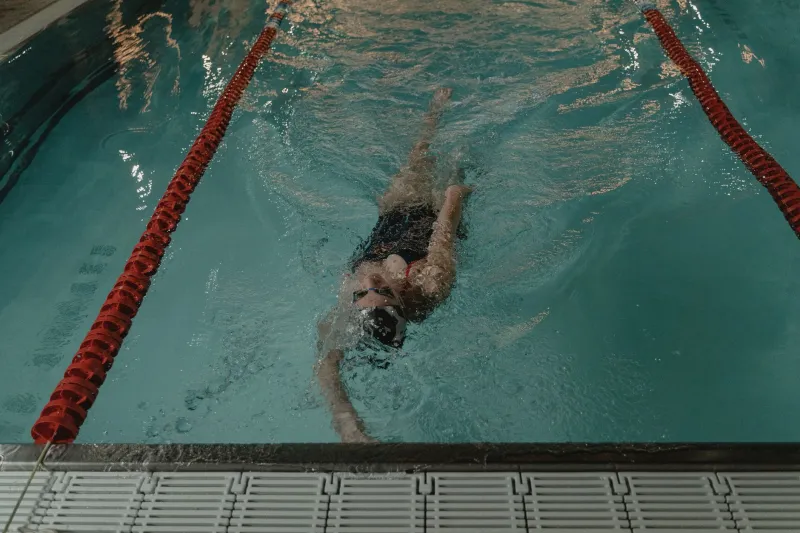
In public leisure, the most revealing document is often the timetable. It shows when the water is available, who it is thought to be for, and what a council believes it can afford. For Muslim swimmers in 2026, that timetable has become a point of civic scrutiny.
Modest-swim sessions are not a niche extra. They are an access arrangement, like a ramp at a library door or an interpreted notice at a housing office. They allow people who would otherwise stay away from public pools to swim, exercise and use a civic space that their council tax helps fund. When those sessions are moved, shortened or quietly dropped, the question is not only about one hour in the water. It is about how local authorities make decisions and who is heard when they do.
A timetable is a policy document
Leisure centres across the UK are under pressure. Councils have had to balance statutory duties against discretionary services, and swimming pools are expensive to heat, staff and maintain. Many authorities have restructured their leisure offer, transferred centres to arm's-length trusts, or reduced opening hours. In that context, modest-swim sessions can look vulnerable because they are often scheduled at the edges of the day and attract smaller headline numbers than general swimming.
But small numbers can be misleading. A session that serves twenty people consistently may be more valuable than a sporadic general swim that serves a hundred once. The real issue is whether councils collect the right evidence before changing provision. Do they know who uses each session? Have they assessed the equality impact of a timetable change? Did they consult the communities affected before the decision was taken, rather than after?
Public bodies in England, Scotland and Wales have duties under equality legislation to consider how their decisions affect different groups. That does not mean every session must be preserved. It does mean the reasoning should be transparent. A timetable change that removes the only modest-swim slot in a district, without an assessment of its effect on Muslim women, older residents or families, is a decision that deserves scrutiny.
The trust question
Many public pools are now managed by leisure trusts or private contractors. This can bring investment and expertise, but it can also stretch the chain of accountability. The council may own the building and set the strategy, while the trust runs the day-to-day operation. When a session is cut, residents can be left unsure whom to ask.
Muslim swimmers and community groups are beginning to learn this landscape. They are asking who holds the contract, when it is reviewed, and what social value commitments were written into it. They are looking at performance indicators that measure more than footfall. They are attending council scrutiny meetings where leisure contracts are discussed. This is not adversarial for its own sake. It is the ordinary work of civic participation in a mixed economy of public services.
Councillors still have levers. They can ask officers for attendance data, equality assessments and consultation summaries. They can press for contract reviews to include access for underrepresented groups. They can ensure that any new leisure strategy is not written solely around revenue targets. The point is not to micromanage a pool timetable from the town hall. It is to make sure that public money delivers public access.
Organising around access
In several towns and cities, Muslim swimmers have started to organise around leisure scrutiny. Some groups are informal: a women's swimming circle that shares information about sessions, a mosque sports committee that books lanes, a network of parents who want lessons for their children. Others are more structured, with representatives who respond to council consultations and meet the portfolio holder for leisure or public health.
This kind of organising is unglamorous but effective. It involves reading budget papers, submitting questions before deadlines, and building relationships with leisure officers who are often doing their best under financial constraint. It also involves working with other residents who value public pools: older people who use them for rehabilitation, disabled swimmers who need accessible changing rooms, and families who rely on lessons.
There is a risk in treating Muslim access as a single-issue campaign. Modest-swim sessions sit alongside concerns about pricing, transport, changing facilities and the availability of women-only instructors. A serious leisure strategy considers all of these. Muslim swimmers are not asking for a separate pool. They are asking for a fair share of the public one.
The health case and the public purse
Swimming is one of the few forms of exercise that can be taken up across the life course, with low impact on joints and clear benefits for cardiovascular health and mental wellbeing. Councils know this. Many have health and wellbeing strategies that emphasise physical activity, social connection and reducing inequalities. Leisure centres are part of that picture.
Connecting access to health outcomes can strengthen the case for modest-swim sessions. But the argument should not rest only on utility. Public space is not valuable only when it can be counted in a health budget. It is valuable because it belongs to everyone. A pool that is open in principle but inaccessible in practice is not fully public.
Questions worth asking
For Muslim residents who want to engage with leisure scrutiny in 2026, the practical questions are straightforward. What data does the council collect on session attendance and cancellations? How are timetable changes equality-assessed? What consultation took place, and with whom? How is the leisure trust held to account? Are prices affordable for families? Are changing facilities adequate for dignity and privacy? Are swimming lessons available at times that working parents can manage?
These are not hostile questions. They are the questions any active citizen might ask about a public service. The answers will vary from place to place, and so will the solutions. In some areas, a modest-swim session may need to move to a better slot. In others, the issue may be marketing, staffing or pool temperature. The point is that decisions should be made with the affected communities, not about them.
A civic habit
Pools are expensive, and councils face hard choices. Pretending otherwise would not help Muslim swimmers or anyone else. But hard choices are exactly when scrutiny matters most. A budget line that looks small in a town hall spreadsheet can represent a weekly routine, a health gain or a rare hour of ease for a resident who otherwise feels unwelcome in public space.
The deep end of local democracy is not a dramatic place. It is a committee room where a leisure contract is discussed, a consultation portal that closes at midnight, a timetable pinned to a wall. Muslim swimmers are learning to work there. In 2026, that quiet work is part of the larger question of how British public life makes room for everyone.