Neutral Ground: The Quiet Contract Between Mosque Halls and the Ballot
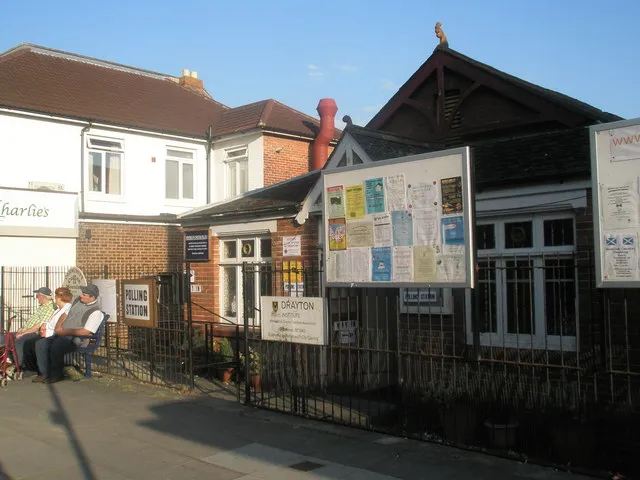
Photo: Basher Eyre, CC BY-SA 2.0, via Wikimedia Commons
On polling day, the chairs come down from the storeroom. The carpet that usually holds rows of worshippers is covered with temporary flooring. Polling booths are assembled along the qibla wall, their pencils sharpened, their notices laminated. By seven in the morning, the hall that ordinarily hosts prayers, lectures and community meals has become a polling station. The transformation is temporary, but it is not trivial.
The Administrative Case
Returning officers are, by temperament, practical. They need venues that are accessible, insured, well-lit and large enough to accommodate a steady flow of voters. Schools, churches and community centres have long supplied this infrastructure. But as local authority budgets tighten and as traditional venues close or become unavailable, mosque halls have entered the frame. In cities such as Birmingham, Bradford, Leicester and parts of London, the arrangement is now familiar. The mosque is not usually the only venue in a ward, but it is often one of the most convenient.
The reasons are mundane. Many mosque halls sit in dense residential areas, close to the voters they serve. They have kitchens, toilets, step-free access and parking. They are known landmarks. For a returning officer, the question is not whether a venue is sacred or secular but whether it meets the specification. The contract is a hire agreement, not a statement of ideology.
Neutrality Is Not Passive
That does not mean the arrangement is neutral in practice. A polling station must be a place where no voter feels pressured, watched or unwelcome. Electoral Commission guidance is clear: no political material, no campaigning, no suggestion that any party or candidate has the backing of the venue. Mosque trustees take this seriously, often more seriously than the guidance requires. Leaflets are removed from noticeboards. Bookstalls are covered. Staff are briefed. Party activists who happen to be worshippers are asked to keep their activity outside the building.
The deeper question is symbolic. Does hosting the ballot compromise the mosque's independence? Some trustees worry that the building becomes associated with the state, or with a particular council, or with the act of voting itself. Others argue that civic service is part of the Muslim presence in Britain: the mosque is not a sectarian enclave but a public institution, and public institutions host public business. The debate is not usually resolved in a formal statement. It is settled in the practical details: a clear sign at the entrance, a separate room for party agents, a quiet word to a candidate who arrives wearing a rosette.
Access and Dignity
The practical details matter because they determine who feels able to vote. A polling station in a mosque hall must be accessible to people of all faiths and none. That means step-free routes, clear signage in English and, where needed, community languages. It means private booths that do not face the prayer area. It means women's facilities that are clearly signposted, and staff who understand that some voters may be entering a mosque for the first time.
There is also the question of hospitality. A polling station is not a social event, but it is a civic one. The best arrangements offer a warm room, a chair for those who need to rest, and a steward who knows where the polling booths are. These are small things, but they shape the experience of democracy. For older voters, for disabled voters, for people whose first language is not English, the difference between a welcoming hall and a confusing one can be the difference between voting and turning back.
The Geography of Trust
The trend also reveals something about the changing geography of British democracy. Polling districts are not abstract lines on a map; they follow streets, estates and neighbourhoods. In inner-city wards, the traditional venues — church halls, school gyms, libraries — are not always available. Some have closed. Some are oversubscribed. Some are simply too small. Mosque halls fill a gap.
That gap-filling has a wider effect. When a mosque becomes a polling station, it becomes part of the ordinary infrastructure of civic life. The building is no longer only a place of worship; it is a place where the state asks citizens to perform a basic democratic act. That normalisation is quiet and cumulative. It does not erase the symbolic questions, but it answers them in practice. The ballot box in the prayer hall is not a clash of civilisations. It is a question of civic infrastructure.
What the Returning Officer Sees
From the returning officer's perspective, the day is a logistical exercise. The mosque is a landlord. The polling station is a public space for the day. The contract specifies hours, insurance, fees and access. The staff are trained to be neutral. The ballot boxes are sealed. The count begins elsewhere.
But the returning officer also sees the queue. They see the older man who has voted in the same hall for a decade. They see the young woman who asks where the polling booth is. They see the steward who directs a voter to the step-free entrance. These are the moments that build trust. They are not political. They are civic.
A Quiet Normalisation
For Muslim civic organisations, the lesson is not that every mosque should become a polling station. The lesson is that civic participation is built through ordinary arrangements. A hire agreement, a clear sign, a neutral space, a warm welcome: these are the materials of trust. The ballot box in the prayer hall is a reminder that democracy is not only a set of ideals but a set of rooms. And those rooms are changing.
That is why the trend matters. It is not a revolution in British politics, but it is a shift in the geography of democracy. The mosque hall, like the church hall before it, is becoming part of the everyday landscape of the ballot. The question is not whether that is symbolically significant. It is. The question is whether the practicalities are handled with care. On that, the health of local democracy depends.