The Notice in the Window: Muslim Residents and the Quiet Machinery of Licensing
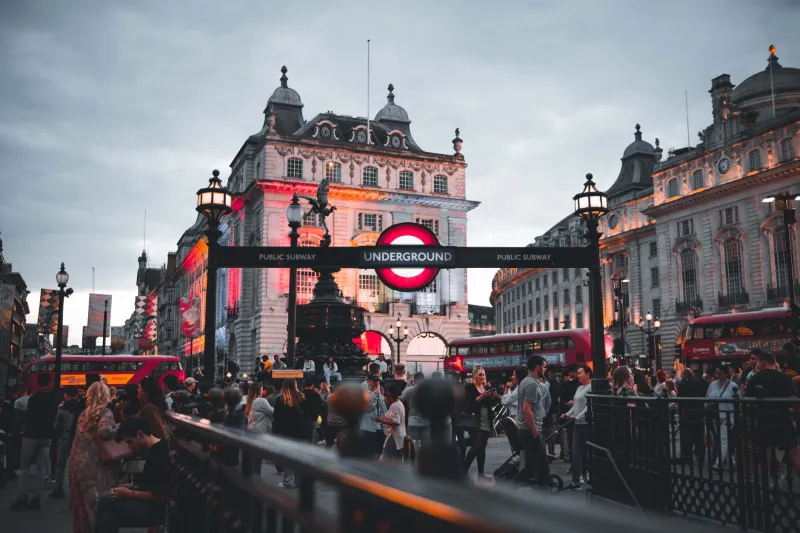
Walk down a high street at ten on a Friday night and it is easy to assume that the shape of the night-time economy is settled somewhere far away: in Whitehall, in a brewery boardroom, or in a chain’s property department. In practice, a great deal of it is settled in a committee room on a Wednesday afternoon, in front of three councillors and a legal adviser, following a notice that was fixed to a lamp post for four weeks and read by almost nobody.
For Muslim residents and mosque communities, licensing is one of the most direct routes into local decision-making available. It moves faster than a general election, it is more concrete than a consultation survey, and it reaches precisely the premises that keep people awake, alter the character of a shopping parade, and sell alcohol, shisha or gambling products within sight of a school gate.
What a licensing authority actually decides
The Licensing Act 2003 covers alcohol sales, regulated entertainment and late-night refreshment. Variations to an existing licence matter as much as new applications: a modest extension of hours, a raised capacity, an added outdoor area can change a street more than a fresh application ever would. Gambling runs on a separate regime under the Gambling Act 2005, with its own statement of principles and its own local area profile. Shisha premises often sit awkwardly between planning, smoke-free enforcement and licensing, which is why they are rarely resolved by a single letter of objection.
Everything before a committee rests on four statutory objectives: the prevention of crime and disorder, public safety, the prevention of public nuisance, and the protection of children from harm. A representation only bites if it speaks to one of them, with evidence. That is the discipline the process demands, and it is also its fairness.
The documents that settle the argument before it starts
Long before any hearing, two documents do most of the work. The first is the council’s statement of licensing policy, which must be published and consulted on at least every five years; several authorities are refreshing theirs in 2026. The second is the cumulative impact assessment, which identifies streets where the concentration of licensed premises is already judged to undermine the objectives and creates a rebuttable presumption against new licences.
A mosque that engages at this stage — submitting evidence about noise, dispersal, street drinking or late-night crowding, with dates and locations — shapes the frame in which every subsequent application is judged. A group that arrives only when a specific premises applies is arguing uphill. Related tools include the late night levy, various conditions on hours and capacity, and planning rules on the “agent of change” principle, which places responsibility for mitigating noise on the incoming developer.
What makes a representation “relevant”
A representation must come from an interested party — someone living or working in the vicinity of the premises, or a body representing them — or from a responsible authority such as the police, environmental health or the fire service. It must arrive within the advertised period, and it must not be frivolous or vexatious.
The distinction that decides most cases is this. “We object to alcohol on religious grounds” is unlikely to be accepted as a relevant representation, because personal belief alone does not engage the four objectives. “Bottle collections at 02:40 woke eleven households on the dates listed, recorded here with timestamps” almost always is.
Evidence that committees find persuasive tends to be modest and specific: a nuisance diary kept over three months, photographs with dates attached, noise-app readings, a letter from a GP about the health impact on an elderly patient, a statement from a nearby school about the school run, corroborating statements from several households living in different directions from the premises. A group submission carries more weight when each signatory gives their own address and describes their own experience rather than signing a shared paragraph.
Inside the hearing room
A licensing sub-committee usually comprises three councillors advised by a solicitor and a clerk. It is not a political forum and it is not a court, though it borrows from both: members must approach each application with an open mind, hear all sides, and give reasons for their decision. Muslim councillors who sit on these panels carry a particular responsibility here, and the strongest among them are scrupulous about deciding on the evidence in front of them rather than on a pre-formed view.
In most cases the outcome is a set of conditions rather than a refusal: door supervision, a dispersal policy, no glass after a certain hour, a reduced capacity, a changed designated premises supervisor, a challenge-25 scheme. Mediation before the hearing frequently produces agreed conditions without the cost and antagonism of a contested hearing. Where a decision does go against an operator, or against residents, there is a right of appeal to the magistrates’ court within 21 days, and costs can follow.
The remedy people forget: review
A premises licence is not fixed for ever. An interested party or a responsible authority can apply for a review of an existing licence, which can lead to additional conditions, reduced hours, suspension or revocation. Authorities will not look kindly on repeated reviews without fresh evidence, but a well-documented review after a year of unaddressed nuisance is one of the most effective instruments local democracy offers.
Where Muslim communities are already doing this
Across several authorities, the pattern is quietly repeating. Mosque-run community forums keep nuisance logs and pass them to the police licensing officer before an application is due. Women’s groups have submitted joint representations about shisha lounges beside parks where children play. Trader associations working with mosques have contributed to cumulative impact assessments, because a chaotic street deters the custom everyone depends on. Ward councillors with mosque links have learned to ask the right procedural question at the right moment.
None of this requires a legal team. It requires records, timing and a working knowledge of the council’s own published policy.
Opposition is not the only option
A common mistake is to treat licensing as a referendum on the night-time economy. It is not. A well-run restaurant that closes at eleven, employs local people and manages its queues is an asset on any high street, and residents who support good operators are taken more seriously when they object to poor ones. The goal is a high street that works after dark without exporting its costs to the people who live behind it.
A practical route in
- Find the council’s licensing pages and sign up for notifications of new applications.
- Read the statement of licensing policy and ask when it is next being revised.
- Check whether your street sits within a cumulative impact area.
- Keep a dated nuisance log, however informal.
- Speak early to the ward councillor and the police licensing officer.
- Submit representations within the window, in your own name and address.
- Ask for mediation before a hearing is needed.
- Request the written decision and reasons afterwards.
- Diary a review twelve months on if conditions are not being met.
The notice in the window is easy to miss. Reading it, and answering it, is a form of civic duty that fits comfortably alongside everything else a mosque community already does.