Opening the Door Carefully: Muslim Foster Carers and the 2026 Placement Shortfall
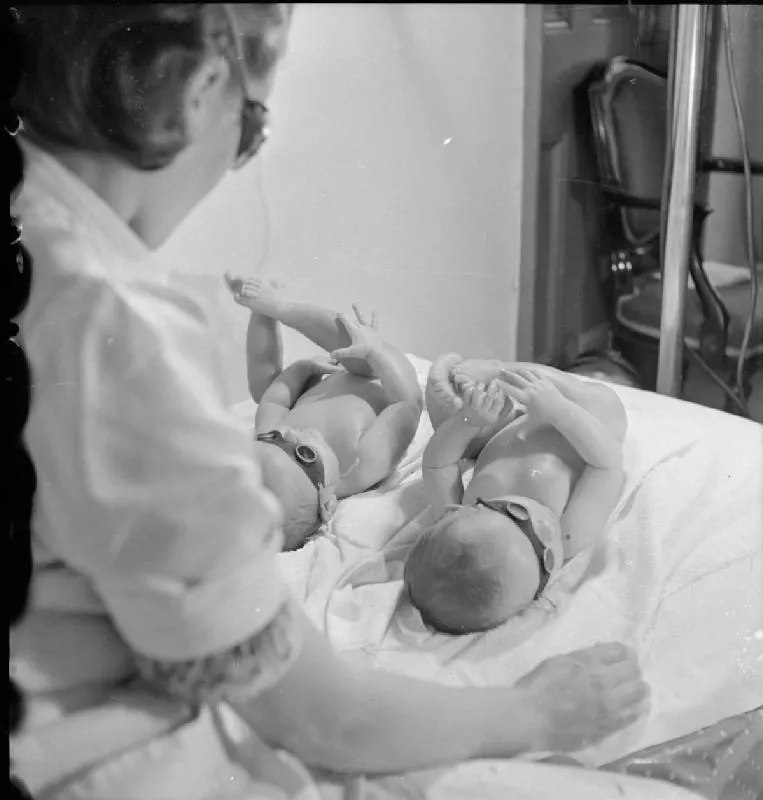
Photo: Ministry of Information Photo Division Photographer, Public domain, via Wikimedia Commons
In a side room off a mosque corridor in the West Midlands, a row of folding chairs faces a flip chart. The session is not about prayer timings or fundraising. It is about fostering: the assessment process, the training, the allowances, the panel, and the particular needs of children who arrive in care having already lost more than a bedroom. Sessions of this kind have become a familiar feature of the civic calendar in 2026, as councils seek homes for children in care and Muslim communities are asked, with increasing directness, to consider what they can offer.
The request is not new. For years, local authorities have reported difficulty finding placements that meet the religious, cultural and linguistic needs of Muslim children. What has changed is the urgency and the framing. Placement shortages have pushed children further from their home areas, their schools and their communities. Recruitment drives now routinely approach mosques, community centres and Islamic supplementary schools. The language used is often that of civic duty: a spare room, a stable adult, a child who needs both.
The gap between a room and a home
It is tempting to treat the placement crunch as a simple arithmetic problem. There are children who need homes; there are households with unused rooms. The reality is more complicated. Fostering is a regulated activity, not an informal arrangement between neighbours. Applicants face enhanced checks, references, home visits, training on attachment, trauma and safeguarding, and a panel that decides whether they are ready. The process is deliberately demanding, and it should be.
For many Muslim households, the more difficult questions begin after the paperwork. Fostering can reshape a family's daily rhythm. It may require careful negotiation with extended relatives, adjustments to work patterns, and a willingness to accept professional oversight of intimate family life. The spare room is the least demanding part of the offer.
What 'culturally appropriate' actually means
In policy documents, the phrase 'culturally appropriate placement' appears frequently. It can be reduced too easily to halal food and a prayer mat. Those matter, but they are not the whole of it. A child's sense of identity may be bound up with language, with the rhythm of Ramadan and Eid, with the way a household talks about family, respect and belonging. A placement that meets a child's religious needs but ignores their emotional and educational needs is not an appropriate placement. Neither is one that treats faith as a box to be ticked and then set aside.
Councils are increasingly alive to this distinction. Some now ask foster carers to describe not only their religious practice but their capacity to support a child's relationship with their birth family, their school and their wider community. The best assessments treat culture as part of a child's welfare, not as an optional extra. That approach is consistent with the longstanding principle in children's social care that the child's welfare is paramount, and that identity, background and faith are part of what makes a childhood secure.
Where faith meets safeguarding
Fostering within a faith community raises legitimate questions, and it is better to address them openly than to avoid them. Safeguarding must remain non-negotiable. A child in care may have experienced abuse, neglect or trauma; they may be uncertain about their own beliefs; they may have been placed because of conflict at home. Foster carers are not missionaries. They are professionals in a demanding role, and they are expected to uphold a child's right to be safe, to be heard and to be treated with dignity.
This is not a tension unique to Muslim households, but it is one that recruitment evenings should discuss plainly. Good training helps carers distinguish between offering a child a stable home and imposing a way of life. It also equips them to recognise when a child's religious or cultural needs are being used as a cover for control, or when a placement is being asked to serve the community's reputation rather than the child's welfare. Those conversations are uncomfortable, but they are a sign of seriousness rather than a reason for retreat.
The support that makes the difference
The civic appeal to open spare rooms is understandable, but it places a heavy burden on communities that are often already stretched. Muslim households are more likely than average to include multiple generations, to be involved in caring responsibilities and to have modest incomes. The financial allowances paid to foster carers rarely replace a lost wage. Retention is a persistent problem across the system, and it is not solved by recruitment posters alone.
What makes a difference is sustained support: accessible training, culturally confident social workers, respite arrangements, and a clear route to raise concerns without fear of being labelled difficult. Local authorities that invest in these areas tend to see better outcomes, not only in recruitment but in the stability of placements. Faith groups can help by hosting information sessions and by being honest about the demands of the role. They cannot replace the state's obligations.
A shared responsibility, carefully framed
The case for Muslim foster carers in 2026 is not that communities owe the state a favour. It is that children do better when their homes reflect something of who they are, and that a care system under strain cannot meet that need alone. The invitation to open a door should therefore come with reciprocity: proper assessment, real support, and a shared commitment to the child's safety and future. A spare room can begin a placement. Only careful, well-supported work turns it into a home.