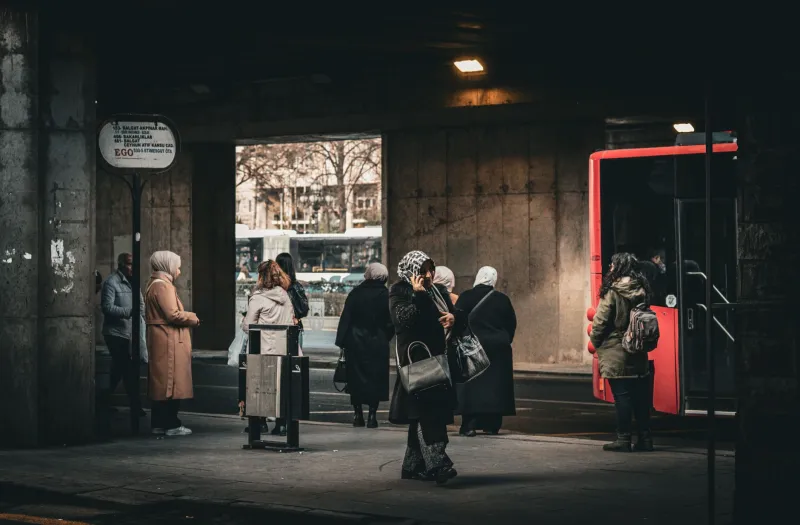
The Borrowed Shelf: Muslim Volunteers and the 2026 Fight for Public Libraries
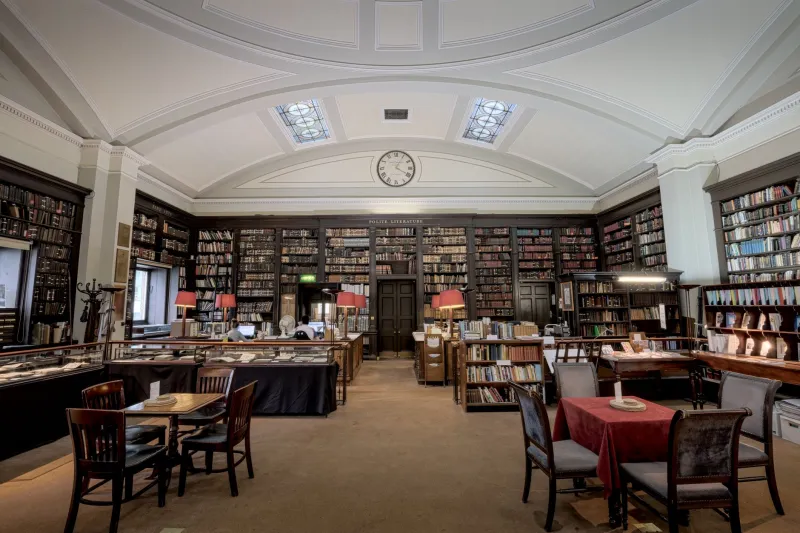
As councils across England work through the 2026-27 budget cycle, public libraries are once again in the frame. Closure proposals, reduced opening hours and the redesign of branch services are being weighed against statutory duties, staffing costs and the increasingly broad role that libraries play in local life. For Muslim communities, the debate is not abstract. Libraries are study spaces, language classrooms, warm rooms, digital access points and neutral public places. They are also, increasingly, sites where mosque volunteers and community groups are being asked to do more.
A statutory service under strain
The legal starting point is well established. The Public Libraries and Museums Act 1964 requires local authorities in England to provide a comprehensive and efficient library service. What that means in practice has always been contested, but the direction of travel in recent years has been clear: fewer staffed hours, more self-service, more reliance on volunteers and more pressure to prove footfall and social value.
The 2026 round of consultations has sharpened those questions. Councils facing gaps in adult social care, children's services and highways maintenance are looking at discretionary spending with fresh urgency. Libraries are rarely the largest line in a budget, but they are among the most visible. A closure or a cut in opening hours registers quickly in a neighbourhood, especially where the library is the last public building with a free toilet, a printer and a chair that does not require a purchase.
That is the context in which Muslim civic groups have entered the debate. Not as bystanders, and not simply as users, but as organisations with premises, volunteers and a grounded understanding of what happens when public services thin out.
The book corner and the homework table
Mosque-run book corners are not new. Nor are the homework clubs that meet after school in side rooms, the ESOL classes led by retired teachers and university students, or the informal warm spaces that open during cold spells. What is new in 2026 is the scale at which these activities are being discussed as part of the library settlement rather than as separate community projects.
In some areas, mosques have hosted council library pop-ups while a branch is refurbished. In others, community groups have run book drives to stock shelves in rooms that were never designed as lending libraries. Volunteers have set up homework tables with donated laptops, organised reading circles for children and adults, and offered language support to women who rarely encounter a formal classroom. These are modest interventions, but they are not trivial. They create routine, trust and a reason to leave the house.
The risk is that such work is described only as generosity. It is also labour, often performed by people who are themselves managing work, caring responsibilities and the ordinary pressures of family life. Recognising that labour matters if the relationship between mosques and councils is to be more than a photograph of a cheque handover.
From mutual aid to civic infrastructure
A more constructive framing is emerging in some consultation responses: the reading room as civic infrastructure. On this view, a library is not a luxury to be preserved when budgets allow. It is part of the scaffolding that makes a neighbourhood work — alongside schools, GP surgeries, parks, places of worship and community centres.
Muslim groups have a strong case to make here, provided they make it carefully. Libraries are among the few public spaces that do not require a religious identity, a membership fee or a reason to enter. They are used by older people seeking company, by jobseekers completing applications, by parents with small children and by teenagers who need a desk and a signal. For Muslim families, as for others, the library is often the first public institution a child learns to use independently.
That is why some mosque-led organisations have begun submitting joint evidence to library consultations, drawing on their own waiting lists and session attendance. The argument is not that volunteers can replace professional staff. It is that the public value of a library is wider than its book stock, and that the communities most likely to lose out when hours are cut are often the least likely to be heard in a budget survey.
The limits of volunteerism
There is a serious caution to attach to all of this. Volunteer effort can illuminate a gap, but it can also normalise the gap. A homework club in a mosque hall is a good thing; it is not a substitute for a school library or a staffed local branch. An ESOL session run by volunteers is valuable; it does not discharge a council's responsibilities for adult skills or community cohesion.
There are practical limits too. Volunteers need safeguarding checks, training and supervision. Buildings need insurance, heating and accessible facilities. Coordination takes time, and time is precisely what small community organisations lack. Where councils quietly encourage mosque groups to absorb library functions without funding, the result is not partnership but offloading.
The mature position is therefore neither defensive nor triumphalist. Muslim volunteers should be proud of what they do, and clear about what they cannot be expected to do. Public provision should remain public, and community contribution should be recognised as complementary rather than substitutive.
A seat at the consultation table
In 2026, the most useful form of Muslim civic engagement may be less visible than a book drive. It is the consultation response that asks precise questions: what equality impact assessment has been carried out? Which wards lose the most staffed hours? How will digital-only access affect older residents and those without home broadband? What happens to the warm-space commitment when the library closes at three in the afternoon?
Councils, for their part, should be honest about the terms of partnership. A memorandum of understanding is better than a vague promise. Clear referral pathways between libraries and community groups are better than duplication. Joint safeguarding arrangements are better than goodwill. And funding for coordination is better than assuming that volunteers have unlimited capacity.
None of this requires Muslim groups to become library campaigners in every town, still less to align themselves with any particular political faction. It requires them to do what they have often done well: translate lived experience into evidence, and insist that public services are judged by the people who rely on them most.
What the shelf should still guarantee
The library debate is often framed as a choice between buildings and books, or between staff and technology. The better question is what a neighbourhood should still be able to guarantee in 2026. A warm, safe room. A trained person to ask. A shelf of books for a child who does not have one at home. A computer and a quiet hour to use it. A place where no one is required to explain why they are there.
Muslim volunteers are helping to keep some of that promise alive. They should be welcomed, supported and scrutinised like any other civic actor. But their work should not become the alibi for a thinner public library service. The borrowed shelf is a valuable thing. It is not the same as the public shelf, and the distinction should remain at the centre of the argument.