Paper Trails and Public Trust: Muslim Groups Face the 2026 Council Grants Cycle
Photo: Chris McKenna, CC BY-SA 4.0, via Wikimedia Commons
Every winter, in committee rooms across England, Wales and Scotland, a familiar ritual unfolds. Officers circulate a scoring matrix. A cabinet member signs a decision notice. A list of voluntary organisations appears on a council website, some names funded, others marked 'not recommended'. For Muslim-led charities and mosque-linked community groups, this is the moment when years of quiet service meet the cold arithmetic of a local authority budget.
The 2026 round arrives under particular strain. Several councils have spent the past two years trimming discretionary spend, drawing on reserves and rewriting eligibility criteria for what they now call 'VCSE grants'. The voluntary, community and social enterprise sector is being asked to do more with less, while simultaneously being asked to prove that it does anything at all. For Muslim community infrastructure — supplementary schools, advice services, youth clubs, food projects, bereavement support — the grants round is no longer a sideshow. It is a test of whether grassroots work can be described in the language the public purse now demands.
Where the money actually sits
It helps to be precise about what 'council funding' means. Very little of it is a single pot. There are discretionary grants for the voluntary sector, often administered by a communities team. There are public health grants for specific outcomes such as mental wellbeing or physical activity. Some authorities still operate locality or ward budgets, devolved to councillors for small-scale projects. Police and crime commissioners run their own community funds. Alongside these sit National Lottery programmes, charitable trusts and corporate foundations.
The result is a fragmented landscape in which a single advice project might need three applications, each with a different form, deadline and definition of success. Groups that understand the architecture early are at an advantage. Those that learn about a fund the week before it closes are not.
Practical steps matter here. Read the council's published grant policy, not just the application form. Note whether the scheme is competitive or formula-based. Check whether the authority requires match funding, and whether in-kind contributions such as volunteer hours count towards it. Diarise monitoring deadlines as carefully as bid deadlines, because a group that fails to report on one grant will struggle to win the next.
What councillors and officers actually read
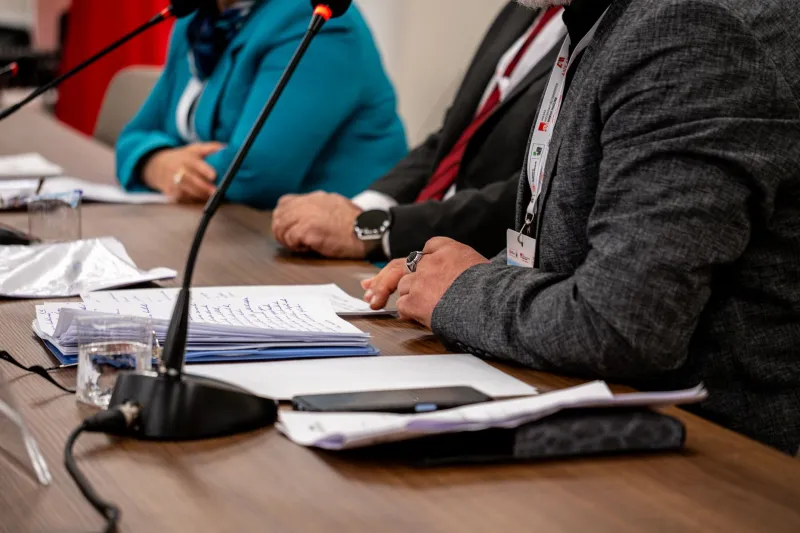
Applicants often assume that emotion carries the day. In practice, most rounds are assessed by officers against a published scoring framework before any elected member sees the paperwork. The questions tend to be consistent: what is the need, what will you do, who will benefit, how will you know, and can you be trusted with the money?
Councillors then encounter the bids through a cabinet report, a scrutiny committee or a delegated decision. Their concerns are usually practical. Is the organisation constitutionally sound? Does it have a safeguarding policy that would survive inspection? Are there conflicts of interest among trustees? Has it delivered before? The political dimension is real but often narrower than campaigners imagine: members want assurance that public money is reaching residents, and that the groups receiving it reflect the breadth of the borough.
Transparency cuts both ways. Councils should publish grant registers, assessment scores and decision records in good time. Groups should expect to be asked difficult questions and should answer them in writing. A refusal to explain how a project was evaluated is rarely a winning strategy.
The governance test
For many small Muslim organisations, governance is where bids quietly fail. A constitution adopted a decade ago may not mention the charity's current activities. Accounts may be prepared by a volunteer treasurer without independent examination. Trustee registers may be incomplete. None of this reflects a lack of integrity, but it does reflect a system that treats documentation as a proxy for reliability.
The remedy is unglamorous and can usually be done in a few evenings. Review the governing document and update objects if necessary. File accounts and confirmation statements on time. Keep a trustee skills audit and a register of interests. Adopt a safeguarding policy with a named lead and a clear route for referrals. Put a data protection statement on the website. Record decisions in minutes. These are the minimum conditions of public trust, and they are increasingly the first filter in any funding round.
Counting what you do
Outputs describe activity; outcomes describe change. A youth club can count attendances, but a funder wants to know whether confidence improved or isolation reduced. Groups should build a simple evidence base throughout the year rather than scrambling for it in February. Attendance registers, case studies gathered with written consent, short before-and-after surveys and unit costs per participant will carry more weight than a glossy brochure.
Honesty strengthens a bid. If a project reaches forty people rather than four hundred, say so, and explain why those forty matter. Councils are wary of inflated claims, and monitoring returns have a way of exposing them.
Consortia and the lead-bidder question
Partnership working is encouraged, and small groups are frequently invited to join a consortium led by a larger organisation. This can bring resources and reach, but it also concentrates risk. Who holds the contract? Who is liable if delivery falters? What happens to staff if the lead partner withdraws? Muslim-led groups should negotiate written sub-agreements, clear payment schedules and a defined role in governance before signing up to someone else's bid.
The dependency trap
Short-term pots create long-term fragility. A three-year grant that funds two salaries produces a cliff edge in year four. Organisations should cost their work fully, including overheads and reserves, and should resist the temptation to underprice a bid simply to win it. Diversifying income — small donations, room hire, trusts, earned income — is slower but steadier than chasing every round.
The civic case for grassroots infrastructure
There is a wider argument that deserves a hearing in 2026. Mosque-linked community groups are not merely service providers filling gaps left by retreating councils. They are sites of civic participation, where residents first learn to chair a meeting, manage a budget or represent a neighbourhood. That capacity is an asset to local democracy, and it is eroded when funding decisions reward only the most polished applicants.
Councils should therefore be transparent about how they weight need, track record and reach, and should consider multi-year settlements where the law allows. Community groups, for their part, should engage beyond the application window: attending scrutiny meetings, contributing to consultations, and building relationships with officers who administer the funds.
The grants round is a test, but it is not a lottery. Evidence, governance and candour remain the most reliable route through it — and the surest way to keep grassroots Muslim infrastructure standing when the budget line moves.