The Missing Timetable: Muslim Passengers and the 2026 Bus Review
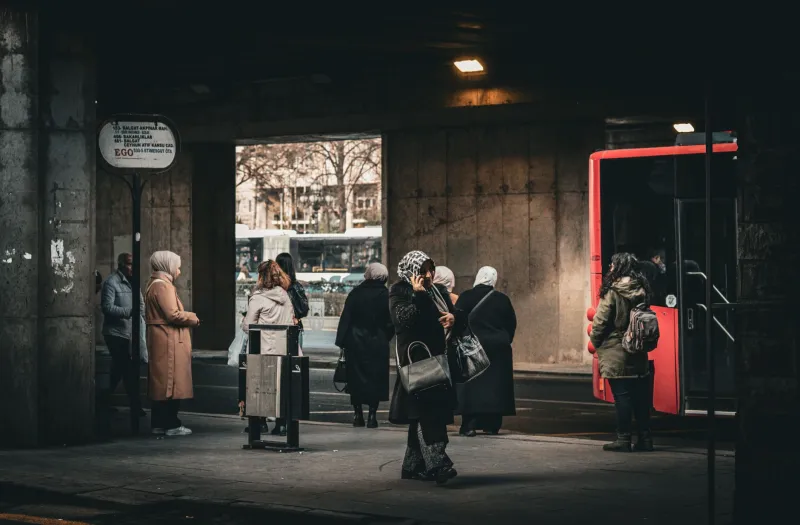
A bus consultation can look like a document about timetables. It is rarely only that. When a council or combined authority proposes to alter frequencies, move a stop, withdraw an evening service or redraw a route, it is also making a decision about who can reach Friday prayers, a hospital appointment, a night shift or a weekly shop. In 2026, as transport budgets remain tight and several local authorities review their networks, Muslim communities have a practical interest in reading these proposals closely and responding with evidence rather than only complaint.
Why a bus map is a community map
Public transport debates often begin with patronage figures. That is understandable. Operators and authorities must account for cost per passenger, reliability and congestion. But patronage alone can hide the journeys that matter most to particular communities. A route with modest overall use may still be the only direct link between an outer estate and a mosque, a college or a health centre. An evening service may carry few passengers but be essential to people finishing shifts in care homes, hospitals, warehouses and hospitality.
Muslim neighbourhoods are not uniform. Some are inner-city areas with high bus use and low car ownership. Others are suburban or semi-rural, where a single hourly service is the difference between participation and isolation. The 2026 reviews should be read with that variety in mind. The question is not simply whether a route is profitable or crowded. It is whether the network allows residents to take part in ordinary public life.
Reading the consultation before answering it
Good responses begin with the document itself. First, establish what is being consulted on. A statutory consultation on a bus franchising scheme is different from an informal survey about a single route. Check the closing date, the decision-making body and whether the consultation is at an early options stage or a final proposal stage. Early engagement can shape the shortlist; late objections can only react to it.
Second, read the maps alongside the text. Look for changes to frequency, first and last journeys, weekend provision, interchange points and walking distances to stops. A route that remains on paper may still become unusable if it no longer connects with a train, another bus or a key destination. Pay attention to accessibility: low-floor vehicles, sheltered stops, lighting and pavement quality all affect whether older people and disabled residents can use the service.
Third, look for the equalities assessment. Many authorities publish an equality impact assessment or integrated impact assessment. These documents should identify groups likely to be affected. If they do not mention religious observance, shift work, deprivation or disability in the local context, that is a legitimate point to raise. It is also reasonable to ask how the assessment was carried out and what data informed it.
The evidence that counts
Consultation teams are used to hearing that a service is valued. They are less used to receiving precise evidence about how and why it is used. A strong submission does not need to be long, but it should be specific. Describe the journey, the time, the destination and the consequence of losing it. For example: a Friday service that carries worshippers to a mosque and back; an early morning route used by hospital cleaners; a Saturday bus that allows families to reach a town centre or a specialist shop.
Community organisations can add to individual responses by gathering simple evidence. A mosque or community centre might record estimated numbers using a stop after prayers, or survey members about whether they would be unable to attend without a bus. Photographs of crowded shelters, poorly lit stops or long walks to alternative routes can be useful. So can a short diary of journeys kept over a fortnight. This is not about producing perfect statistics. It is about making visible patterns that patronage data may not capture.
It is also worth connecting transport to other local priorities. A bus route may support access to employment, reduce isolation among older residents, ease pressure on hospital parking or help young people reach education and training. Framing the case in those terms speaks to the wider objectives that councils and combined authorities already publish.
From complaint to proposition
A consultation response is stronger when it offers an alternative. If a route is proposed for withdrawal, ask what mitigation is possible: a diverted service, a demand-responsive minibus, a community transport link, better interchange or a revised evening timetable. If frequencies are being cut, propose protected peak journeys and ask how reliability will be monitored. If a stop is moving, assess the extra walking distance for older and disabled passengers and suggest a safer crossing or a sheltered waiting point.
Communities should also engage the right people. Local councillors, MPs and combined authority members can raise transport questions in scrutiny meetings. Mosque committees and neighbourhood groups can request a meeting with the consultation team before the deadline. Where several organisations share the same concern, a joint submission can carry more weight than a series of isolated objections. The aim is not confrontation. It is to place community knowledge alongside technical planning.
The longer route: scrutiny and follow-through
Consultation does not end when the survey closes. Ask for the response summary and the decision report. Attend the committee meeting where the changes are approved. If commitments are made about monitoring, accessibility or replacement services, ask how they will be reported. Transport policy is often decided in stages, and the communities that stay engaged after the headline decision are better placed to shape the next one.
Buses are sometimes treated as a residual service for people who have no alternative. In practice, they are part of the everyday infrastructure of civic life. For Muslim commuters in 2026, the bus review is not a technical sideshow. It is a question about whether prayer, work, care and community remain reachable. Reading the consultation carefully, submitting clear evidence and proposing workable alternatives is one way to ensure that question is answered in public.