November’s Shared Ground: Muslim Britain and the Public Work of Remembrance
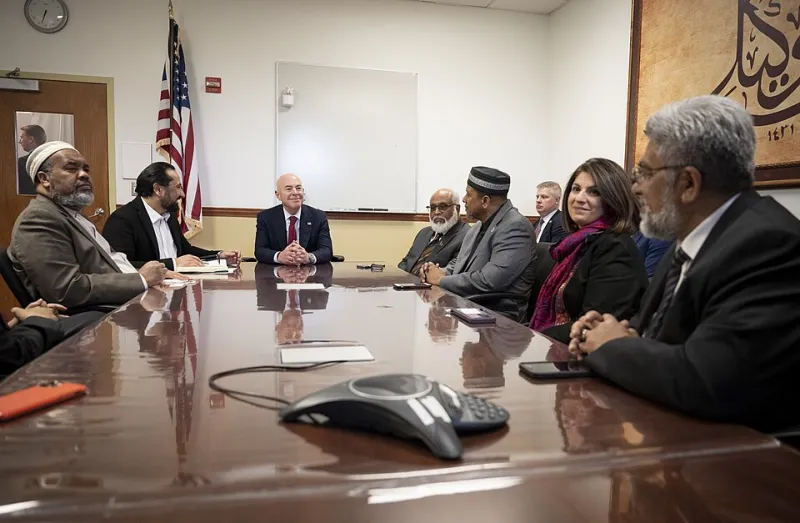
Photo: DHSgov, Public domain, via Wikimedia Commons
On the morning of Remembrance Sunday, 8 November 2026, cenotaphs across the United Kingdom filled with the familiar sounds of civic ritual: the shuffle of feet on wet paving, the lowering of standards, the two-minute silence. Among the councillors, service personnel, cadets and faith leaders laying wreaths were Muslim representatives from local mosques, community centres and voluntary groups. Their presence was not a novelty. It was part of the ordinary work of public life in modern Britain.
Remembrance weekend is often discussed as a national moment. In practice, it is intensely local. The ceremony in a town centre, the poppy appeal outside a supermarket, the school assembly and the interfaith gathering after the service are all organised by people who live in the same wards they serve. For Muslim communities, participation in these events has become one way of answering a simple civic question: what does it mean to belong to a place, not only in word but in practice?
A civic calendar, not a separate one
Muslim participation in Remembrance is not new. Soldiers from what is now Pakistan, Bangladesh and India fought in the First and Second World Wars, and their histories have been gradually incorporated into local commemorations over the past two decades. In 2026, however, the debate has moved on from whether Muslim communities should take part to how that participation is organised, recognised and sustained.
The most visible expression is the wreath. A Muslim councillor laying a wreath at the local cenotaph is performing a public duty like any other elected member. An imam attending a service is representing a congregation that forms part of the town’s civic fabric. A mosque volunteer collecting for the Poppy Appeal is helping to fund services that support veterans and their families. These are not symbolic gestures divorced from daily life; they are small acts of institutional responsibility.
This matters because Remembrance is not only about the past. It is also a test of how public institutions share space and memory. When a mosque is invited to send a representative, and when that representative accepts, both sides are making a statement about the kind of place they want to live in. The statement is stronger when it is repeated year after year, without fanfare or controversy.
The wreath as a public statement
Wreath-laying carries particular weight because it is visible. It places a community’s participation on the record. For Muslim councillors, it can also be a moment of accountability. Constituents may disagree about the symbolism of the poppy or about British foreign policy, and elected members must navigate those views with care. Yet the act of laying a wreath is not a declaration of political agreement. It is a recognition of loss and service, and a commitment to the shared civic life of the locality.
In several local authority areas this November, Muslim-led organisations have coordinated their attendance with veterans’ groups and council civic officers. The arrangements are often unglamorous: confirming times, arranging parking for elderly attendees, ensuring that a hall is available for refreshments afterwards, and making sure that representatives know the order of service. These details matter. They turn an invitation into a reliable partnership.
Poppy appeals and the quiet logistics
Much of the public conversation about Remembrance focuses on the ceremony itself. Less visible is the voluntary infrastructure that makes it possible. Poppy appeal collections require volunteers to staff tables, count donations, store boxes and coordinate with local organisers. In some areas, mosque halls and community centres have become collection points, allowing worshippers to contribute on their way to prayers.
This is where Remembrance connects most directly to community welfare. The Royal British Legion and other service charities use funds to support veterans and their families, including those facing housing difficulties, isolation or health problems. Muslim volunteers who help with collections are therefore taking part in a broader system of care. Their involvement does not require them to have served in the armed forces. It requires them to recognise that veterans are part of the same local community.
Sensitivities around symbolism
It would be inaccurate to pretend that Remembrance is entirely uncontested. Some Muslim constituents, like others across British society, have concerns about military symbolism, the legacy of particular conflicts, or the way patriotism is sometimes defined in exclusionary terms. Community leaders who take part in Remembrance services are often aware of these sensitivities and do not dismiss them.
The more mature response is to separate commemoration from political endorsement. The poppy is not a blank cheque for any government’s foreign policy. It is a symbol of remembrance for those who died in conflict, and a reminder of the obligations owed to those who return. Muslim representatives who explain this distinction — patiently, in sermons, community meetings and conversations on the doorstep — help to keep Remembrance focused on its core purpose.
There is also a responsibility on civic organisers. Services that welcome diverse participation should be careful with language and ritual, avoiding assumptions about who counts as a legitimate mourner. In 2026, the best local ceremonies are those that offer clear invitations, explain the order of events, and make space for people to participate at the level they feel able to.
Interfaith acts and local partnerships
Beyond the cenotaph, Remembrance weekend has become a point of contact between Muslim communities and other local institutions. In some towns, mosques have hosted coffee mornings after the service, giving attendees a warm place to gather. In others, Muslim school governors have helped to shape assemblies that explain the history of Muslim service personnel alongside the wider story of conflict and sacrifice.
These partnerships are most effective when they are not limited to one weekend. A mosque that hosts a Remembrance gathering in November but has no relationship with local veterans’ groups in January is less likely to build lasting trust. The stronger model is the one being developed in several areas: regular contact between community organisations, shared planning for civic events, and a willingness to include Remembrance in the ordinary calendar of mosque activity rather than treating it as an external request.
The test of the ordinary year
The true measure of Remembrance participation is not the photograph of a wreath. It is what happens afterwards. Do Muslim communities and veterans’ organisations stay in contact? Are there shared projects on isolation, housing or support for older people? Do local councils treat Muslim civic groups as routine partners in civic planning, rather than as special cases to be consulted only when a diversity question arises?
In 2026, the answer varies by place. But the direction of travel is clear. Muslim Britain’s engagement with Remembrance is becoming less about proving belonging and more about exercising responsibility. The wreath and the welfare hall belong together. One honours the past; the other sustains the present. Both are part of the same public work, and both are stronger when they are shared.