Rows of Influence: Muslim Growers and the Quiet Politics of Green Space
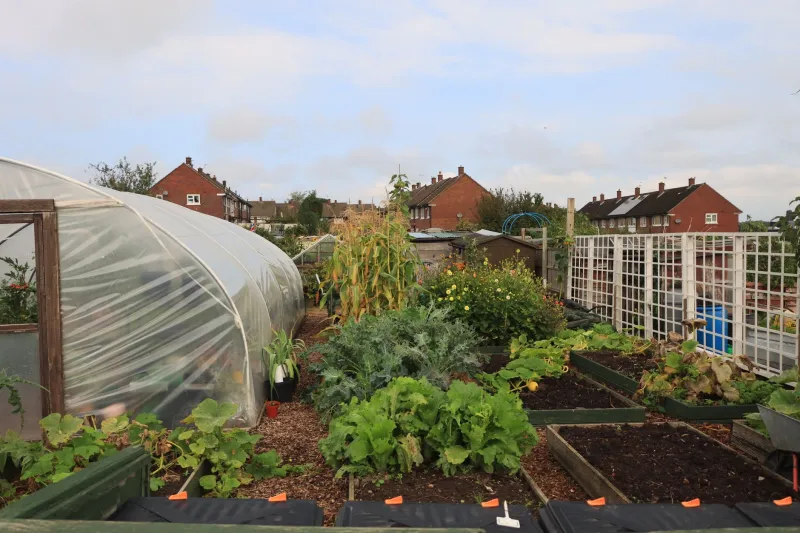
For years, the public face of Muslim civic life in Britain has been associated with buildings—mosques, community centres, advice surgeries. Less visible, but increasingly significant, is a quieter form of participation taking root outdoors: the allotment plot, the community garden, the raised bed behind the mosque hall. In 2026, these spaces are no longer simply places of cultivation. They are becoming sites of civic negotiation, where questions of land, belonging and local democracy are worked out row by row.
From Plots to Policy
The shift is not a sudden one. Muslim-led growing projects have existed for decades, often informally, often in the shadow of larger community institutions. But the pressures of the past few years—food price inflation, the cost-of-living squeeze, a renewed interest in local food systems—have pushed them into new visibility. At the same time, councils under financial strain are reviewing their green assets with fresh intensity. The result is a collision of practical need and procedural politics.
What distinguishes the current moment is not the act of growing itself, but the growing appetite for a seat at the table where land decisions are made. Allotment societies affiliated with mosques, Bangladeshi and Pakistani community associations, and newer groups formed by younger British Muslims are beginning to engage with local plans, neighbourhood forums and council consultations. They are learning the vocabulary of green infrastructure, biodiversity net gain and open-space deficiency. They are, in effect, translating the needs of their members into the language of planning.
The Waiting List as a Civic Test
Ask any allotment society about its relationship with the council and the conversation quickly turns to waiting lists. In many urban areas, the queue for a plot stretches into years, sometimes decades. For Muslim growers, the shortage is compounded by specific pressures: larger household sizes that make a standard five-pole plot insufficient; a preference for communal growing that allows extended families and neighbours to share labour and produce; and the desire to grow culturally familiar crops—okra, bitter gourd, fenugreek, varieties of chilli—that are rarely available in the quantities a family needs.
These are not merely horticultural preferences. They reflect patterns of household economy, food security and cultural continuity. Yet they rarely feature in the standard metrics councils use to assess demand. A waiting list that counts names but ignores household composition and cultural practice can present a misleading picture of need. Some community groups are now arguing that a more granular approach—one that records not just how many people are waiting, but why and for what—would produce a fairer distribution of a scarce public resource.
Land, Development and the Quiet Contest
Behind every allotment site lies a land decision. In an era of housing targets and brownfield regeneration, green spaces are frequently viewed through the lens of development potential. Allotments, often undervalued in council asset registers, can appear as low-yield land. When a site is earmarked for disposal or redevelopment, the debate that follows is rarely straightforward.
Muslim-led growing groups have found themselves drawn into these contests, sometimes reluctantly. A plot that began as a modest community garden can suddenly become a test case for how a neighbourhood values its green spaces and who gets to speak for them. The politics is not always loud. It plays out in consultations held at inconvenient times, in documents laden with technical language, in the quiet alignment of local plan policies with procurement rules.
Observers note that communities with less experience of formal civic processes can be disadvantaged in these moments. The result is not necessarily deliberate exclusion, but a kind of procedural drift—where those who understand the machinery are heard first, and those who do not are heard last.
Speaking the Language of Consultation
Recognising this, several Muslim-led growing projects have begun to build their own capacity. They are sending representatives to neighbourhood planning meetings, submitting responses to local plan consultations, and forming alliances with environmental groups and allotment federations. In some areas, mosque-based growing teams have invited councillors and planning officers to visit their plots—not as a protest, but as an education.
The logic is simple: a plot is easier to defend when its social value is visible and documented. Growers are learning to articulate benefits that go beyond food production—mental health, intergenerational contact, community cohesion, climate resilience. These are the terms that planning departments recognise. They are also, in many cases, genuine descriptions of what these spaces achieve.
What Growing Space Teaches About Belonging
The deeper significance of this shift lies in what it reveals about civic participation. For many Muslim Britons, the allotment is an entry point into local public life that feels tangible and non-confrontational. It is a place where a family can contribute without needing to master the grammar of committee procedure. Yet as the stakes rise, that informal entry point is becoming a school for formal engagement.
There is a risk, too. Not every growing project wants to become a campaign. Some groups worry that politicisation could jeopardise their relationship with landowners or expose them to scrutiny they did not seek. The balance between quiet cultivation and public advocacy is a delicate one, and different communities will strike it differently.
A Seat at the Table
As 2026 unfolds, the question is no longer whether Muslim growers will be part of the conversation about urban land, but how effectively they will be heard. The waiting lists, the development pressure and the quiet politics of green space are not going away. What is changing is the willingness of a new generation of community growers to treat the allotment not only as a place of produce, but as a place of voice.
For local authorities, the opportunity is to see these projects not as a niche interest but as a form of social infrastructure—one that deserves the same serious consideration as any other public asset. For Muslim communities, the challenge is to sustain the civic learning that growing space makes possible, and to ensure that the rows they cultivate are matched by rows of influence in the rooms where decisions are made.