The Signal in the High Street: Muslim Community Radio and the Work of Being Heard in 2026
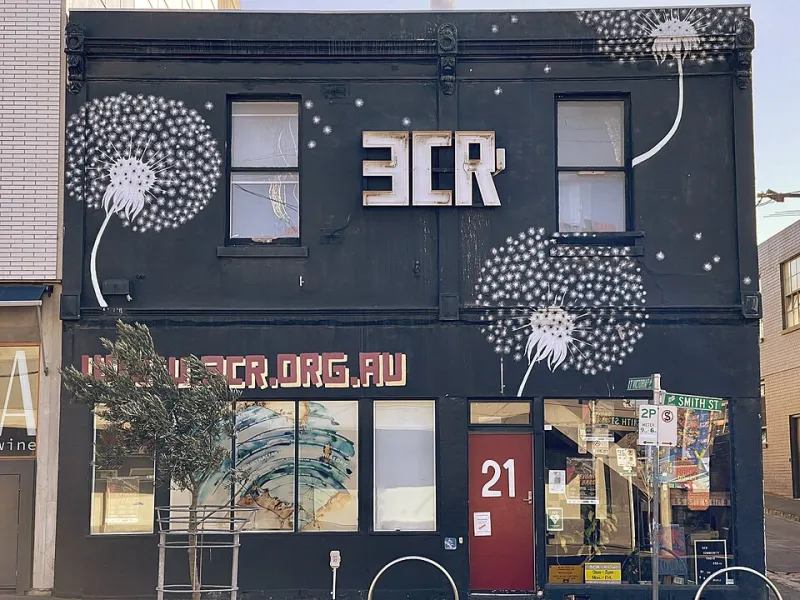
Photo: Canley, CC BY-SA 4.0, via Wikimedia Commons
In many British towns, the most dependable local media presence is not a newspaper office or a regional television bureau. It is a small studio above a shop, in a community centre or on an industrial estate, where volunteers arrive before dawn to prepare a breakfast show, check the community notices and decide which council consultation deserves ten minutes of airtime. For Muslim audiences in particular, these stations have become part of the everyday machinery of local public life: a place to hear advice in a familiar language, to test an argument, and to learn what is happening within walking distance of home.
That is why the current pressures on community radio matter beyond the sector itself. Licensing decisions, funding shortages and the slow move to digital audio are usually discussed as technical questions. In practice, they determine who gets heard in British public life, and how quickly.
More than a frequency
Community radio is sometimes treated as a minor cultural amenity: a hobby for enthusiasts, a training ground for presenters, a schedule of music and conversation. The stations that serve Muslim communities often do all of that, but they also perform a civic function that is easy to overlook until it disappears. They carry local news, public health information, welfare advice, school and transport notices, and coverage of council decisions. They host debates that rarely reach national broadcasters. They give a platform to residents who may not write letters to the editor or post on social media, but who will ring a phone-in or speak to a presenter they trust.
For residents whose first language is not English, this is not a niche service. It is a route into public information that would otherwise remain locked behind a council website, an automated phone line or an English-only consultation document. A station that explains a change to bin collections, a new GP appointment system or a local planning application in Urdu, Bengali, Somali or Arabic is doing the kind of translation work that public bodies often promise but rarely deliver at scale.
The licensing question
Ofcom’s community radio licensing regime is not usually a subject of public controversy. Its decisions arrive as notices, renewal processes and technical conditions. Yet those decisions shape the local media landscape for years. A licence renewal is not merely an administrative milestone; it is a judgment about whether a station has met its obligations and whether it can continue to serve a defined community. For stations with fragile finances and volunteer rosters, the paperwork can be as demanding as the broadcasting.
The shift towards digital audio adds another layer. Small-scale DAB and online streaming offer new reach, but they also require equipment, training, rights payments and reliable broadband. A station that has spent years mastering FM transmission may find itself expected to become a digital publisher as well. The risk is not that community radio disappears overnight. It is that stations serving poorer audiences, or audiences with lower levels of digital confidence, are quietly left behind as the sector modernises.
Funding remains the stubborn constraint. Community radio can generate some advertising and sponsorship, but it cannot compete with commercial stations for large budgets. Grants are often short-term and tied to specific projects. Volunteers fill the gaps, but volunteers also have jobs, families and caring responsibilities. The result is a sector that is frequently praised for its resilience while being asked to survive on the organisational equivalent of goodwill.
The volunteer economy
Behind every hour of local radio is a chain of unpaid work: research, scheduling, compliance, safeguarding, technical support and follow-up. Stations serving Muslim communities often rely on volunteers who are multilingual, locally rooted and deeply trusted. That trust is an asset. It is also a burden. The same presenter who can explain a council decision in plain English and Urdu may be the only person available to cover a major local story, train a new volunteer or represent the station at a partnership meeting.
Burnout is therefore not a private welfare issue. It is a public-interest issue. When a station loses its most experienced volunteers, it loses institutional memory. It may also lose the relationships that made it useful to public bodies in the first place. A council officer who knows whom to call during a flooding alert or a vaccination drive is relying on a network that took years to build. That network is not automatically replaced.
There is a further tension. Community radio operates within strict content rules, and stations must maintain standards of accuracy, impartiality and fairness. These obligations are important. They are also harder to meet when resources are thin. The answer is not to lower standards but to recognise that compliance, training and editorial support are part of the cost of doing public business properly. Stations that serve as civic infrastructure need the same seriousness that public bodies expect from any other partner.
Who gets heard
The most important question about community radio is not whether it is charming or authentic. It is whether it changes the quality of local public life. A station that can reach residents in several languages can help a council explain a difficult decision. It can help a health trust correct misinformation. It can give a mosque, a school or a residents’ group a place to set out its case. It can also hold local institutions to account in a manner that is firm without being performative.
That role becomes more significant as local news continues to thin out. Regional newspapers have contracted, council coverage has shrunk and many public bodies now communicate primarily through websites and social media. The residents least likely to use those channels are often the ones most in need of public information. Community radio does not solve that problem on its own, but it is one of the few local media spaces where civic information reaches people in their own language and on familiar terms.
The test for 2026 is therefore practical. Will licensing and funding frameworks treat these stations as disposable or as part of the local public estate? Will digital migration include the stations that serve audiences with lower digital confidence? Will public bodies build relationships with them before an emergency, rather than during one? And will volunteers be supported in a way that makes their work sustainable rather than merely admirable?
Dead air is not only silence. It is the absence of translation, context and scrutiny in places where those things are needed. Muslim community radio deserves to be judged by that standard, not as a curiosity on the dial but as a working part of British civic life.